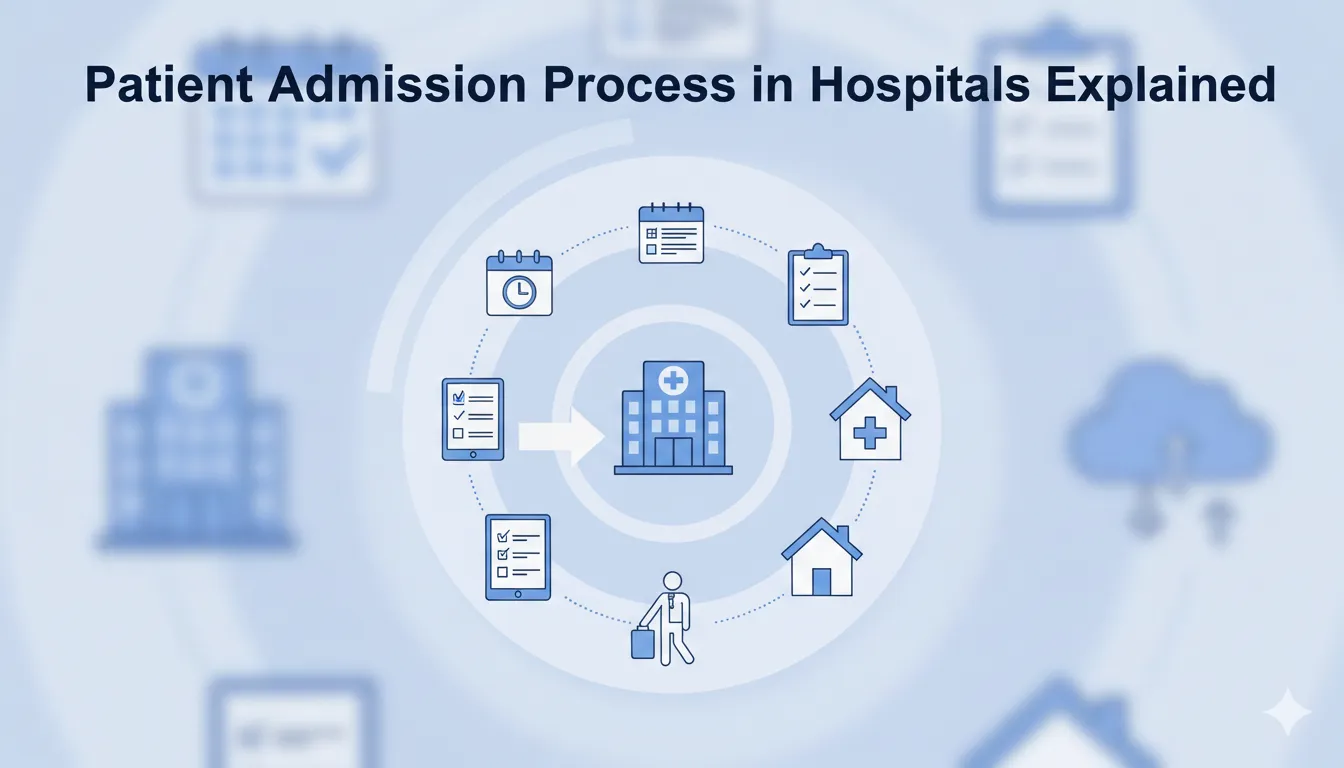
The patient admission process is the most delicate handshake in all of healthcare. It is that high-friction moment where a person in pain—someone who is scared, confused, and probably just wants to lay down—is forced to collide with a massive, bureaucratic machine.
To the hospital, admission is a data-entry project. To the patient, it’s the moment they surrender their autonomy. If you want to see where the “business” of medicine and the “mercy” of medicine rub against each other the hardest, look no further than the first hour of a hospital stay.
Here is how that “choreography of the threshold” actually plays out behind the scenes.
1. The Gatekeepers and the Triage
The process starts long before a patient sees a bed. It starts with a “Gatekeeper.” In a planned admission (like a scheduled surgery), this is a calm conversation at a desk. In the Emergency Department, it’s a high-speed assessment.
The goal here is Triage. The hospital isn’t just asking “What’s wrong?” they are asking “Where do you fit?” They are looking for a slot in the “Tetris board” we talked about earlier. Is this a Cardiac patient? A Respiratory case? A “stable” person who can sit in a chair for three hours?
The challenge for the staff is the In-Take Paradox: you have to get the clinical data (vitals, symptoms) while simultaneously getting the legal and financial data. You’re asking someone who can barely breathe for their insurance card and their primary care doctor’s fax number. It’s an uncomfortable, necessary friction.
2. The Digital Birth (Creating the “Chart”)
Once a patient is cleared to stay, they undergo a “Digital Birth.” A clerk or a nurse creates their Electronic Health Record (EHR). In 2026, this is faster than it used to be, but it’s still the most dangerous part of the process.
If the wrong box is checked—if a “Penicillin Allergy” isn’t entered correctly or a home medication is missed—the ripple effect can be fatal. This isn’t just paperwork; it’s building the “Digital Twin” of the patient. Every doctor, nurse, and pharmacist who treats that person for the next week will be looking at this data, not the person. If the data is wrong, the treatment is wrong.
3. The ID Tag: The Human Barcode
The moment the plastic wristband snaps shut, the person officially becomes a Patient.
It sounds cold, but that wristband is a lifeline. In a busy hospital, people look alike. Names sound alike. “John Smith” in Room 402 and “Jon Smyth” in Room 404 can easily be swapped in a tired nurse’s mind. The admission process relies on that barcode. It’s scanned before every pill, every X-ray, and every blood draw. The “Workflow” of admission is designed to ensure that the human being and the digital record are permanently fused together.
4. The Uncomfortable Conversation (The “Financial Handshake”)
In a perfect world, we’d only talk about healing. In the real world, we have to talk about who is paying.
Whether it’s a private hospital checking insurance “pre-authorization” or a government facility checking residency status, this is the “Financial Handshake.” Management teams hate this part because it sours the “Patient Experience,” but if it doesn’t happen during admission, the hospital loses thousands of dollars.
The staff has to be part-detective and part-debt collector. They have to figure out if the insurance company is going to “deny” the stay before the patient even gets to the room. It’s a high-stakes negotiation happening while the patient is often at their most vulnerable.
5. The Transition (The “Handover”)
Now comes the physical move. This is where the “admission” becomes a “transport.”
A patient doesn’t just walk to a room; they are “Handed Over.” This is a formal ritual. The ER nurse calls the Floor nurse.
- “I’m bringing you Mrs. Higgins. She’s stable, her IV is in the left arm, she’s had one dose of antibiotics.”
- “Wait, I don’t have a clean room yet. The cleaning crew is still in there.”
This “Bed-Wait” is the most frustrating part for everyone. The patient is sitting in a hallway on a hard stretcher, the ER is backed up, and the floor nurse is scrambling to finish a discharge so they can take the new “admission.” It’s a bottleneck that defines the stress of hospital management.
6. The “Settling In” and the Loss of Self
The final stage of admission happens in the room. This is the “Clinical Intake.”
A nurse goes through a 50-question checklist. “Have you fallen lately? Do you have dentures? Who is your emergency contact?” Then comes the most symbolic part: The Gown. When a patient takes off their street clothes and puts on that flimsy, patterned hospital gown, the transition is complete. They have moved from being a “citizen” with a job and a life to being a “subject” of the medical system. They are now officially part of the 24-hour workflow.
The Bottom Line
The admission process is the “Front Door” of the hospital, but it’s a door with a lot of locks. When it works well, it feels like a smooth, professional welcome. When it breaks down, it feels like an interrogation.
For the management team, the goal is to make this process “Invisible.” You want the data to flow, the insurance to clear, and the bed to be ready without the patient ever feeling the gears grinding beneath them. It’s a tall order, and it’s why the “Admissions Department” is often the most stressed-out office in the entire building.