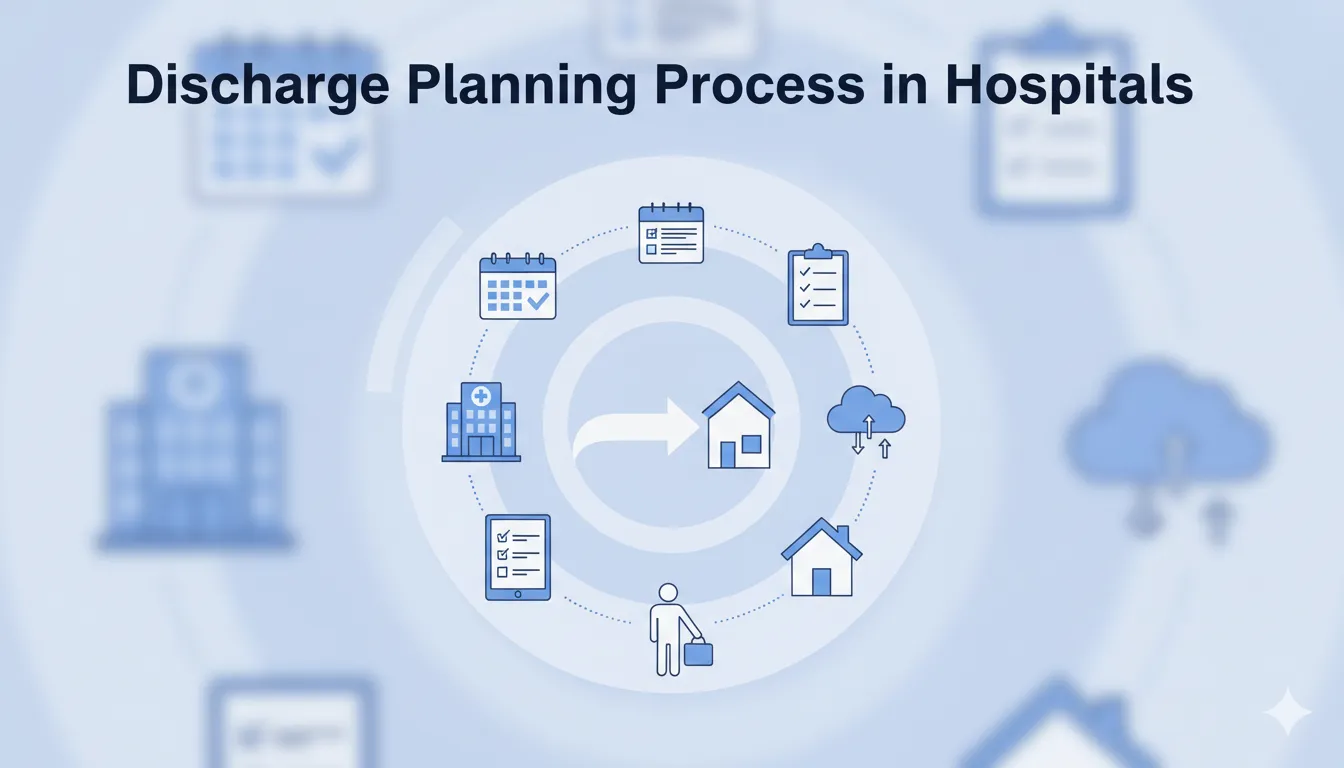
If the admission process is a hospital’s way of saying “Welcome to the machine,” then discharge planning is the frantic, high-stakes attempt to make sure you don’t break the second you step out the door.
In the industry, we call it “Discharge Planning,” but that sounds way too organized. In reality, it’s more like trying to launch a satellite from a moving train. You’re taking a person who has been living in a controlled, 24/7 monitored bubble and throwing them back into a world where nobody is checking their vitals every four hours. If you mess up the “handoff,” the patient ends up right back in the ER within 48 hours, and for a hospital management team, that “readmission” is the ultimate badge of failure.
Here is the “Exit Ritual” explained from the side the patients rarely see.
1. The “Golden Ticket” (The Doctor’s Order)
Everything starts with the “Order.” A doctor walks into the room during morning rounds, looks at the charts, looks at the patient, and says the magic words: “I think we can get you out of here today.” To the patient, this is a celebration. To the nurse, it’s a starter pistol. The second that order is clicked in the computer, a dozen different gears start grinding. The bed management team sees a “potential opening,” the pharmacy sees a “medication reconciliation” task, and the family starts scrambling to find a ride.
But here’s the rub: a doctor saying “today” doesn’t mean “now.” It usually means “six hours from now, if we’re lucky.” This is where the tension starts. The patient has their bag packed by 10:00 AM, but they’re still sitting in that same plastic chair at 3:00 PM, getting more frustrated by the minute.
2. The Paperwork Mountain
Before a patient can leave, the hospital has to create a “User Manual” for their body. This is called the Discharge Summary.
In 2026, a lot of this is automated by AI and smart software, but it still requires a human to sign off on the life-and-death details.
- What pills are they stopping? * What new ones are they starting? * When is their follow-up appointment? * What “Red Flags” mean they need to call 911?
The challenge here is the Communication Gap. You are trying to explain complex medical instructions to someone who hasn’t slept well in three days, is probably on pain medication, and just wants to see their dog. If the nurse rushes this part, the patient goes home, takes the wrong dose of a blood thinner, and bleeds out. The discharge process is a race against time, but it’s a race where you can’t afford to trip.
3. The Pharmacy Trap
The biggest bottleneck in the “Great Escape” is almost always the pharmacy.
In most hospitals, the “Meds to Beds” program is supposed to deliver the final prescriptions directly to the patient’s room. It sounds great on paper. In practice, the hospital pharmacy is usually handling orders for 500 other people. If one insurance “prior authorization” gets stuck in the digital pipes, the entire discharge stops.
You’ll see this all the time: a patient is dressed, their room is clean, their family is waiting at the curb, but they can’t leave because they’re waiting for one specific inhaler or a bottle of specialized antibiotics. For the management team, this is a “dead bed.” It’s a room that could be holding a sick person from the ER, but it’s being held hostage by a piece of paperwork at the pharmacy.
4. The “Social” Wall
Sometimes, the problem isn’t medical; it’s social. This is where the Social Workers and Case Managers earn their paychecks.
A doctor might say a patient is “medically stable,” but if that patient lives alone in a third-floor apartment and they can’t walk up stairs yet, they can’t go home. If the nursing home doesn’t have a bed ready until tomorrow, or if the home-health nurse isn’t available until Monday, the patient stays.
These are the “Invisible Stays.” To the outside world, the hospital looks full. To the management team, the hospital is “clogged” with people who don’t need to be there but have nowhere safe to go. It’s a tragic, expensive bottleneck that highlights how broken the system outside the hospital walls can be.
5. The “Curb” Moment
The final act is the physical exit. Most hospitals have a policy that you have to be wheeled out in a wheelchair, even if you can walk.
This isn’t just about being “nice”; it’s about Risk Management. The hospital is legally responsible for you until you hit the curb. If you trip in the lobby, it’s a “hospital fall.” Once your butt hits the seat of your daughter’s SUV, you’re officially off the books.
There is a weird, psychological shift that happens at the curb. For the last week, this person has been “The Gallbladder in 412.” Now, they are a person again. They’re back in their own clothes, smelling the outside air, and realizing they have to manage their own pain.
6. The “Ghost” of Readmission
For the hospital management team, the discharge process doesn’t end when the car pulls away. They’re watching the data for the next 30 days.
If that patient comes back for the same issue, the hospital might get penalized by the government. They might not get paid for the second stay. This is why you’ll get a phone call 24 hours after you get home. “Did you get your meds? Did you make your appointment? Do you have any questions?” It sounds like a “courtesy call,” but it’s actually a Defensive Maneuver. It’s the management team’s final attempt to make sure the handoff they did yesterday actually stuck.
The Bottom Line
Discharge is the most chaotic part of the hospital “Tetris” game. It’s the moment where the hospital’s responsibility ends and the real world’s reality begins.
When it’s done well, it’s a seamless transition that gives the patient their life back and gives the hospital a bed back. When it’s done poorly, it’s a revolving door that burns out staff and puts patients in danger. It is the final, frantic chapter in the story of a hospital stay, and it’s arguably the most important one.